Quick Answer
Opening three franchise locations at once is almost always the wrong call, even when your development agreement is pressuring you. The version that works is a staggered rollout with roughly 6 to 10 weeks between construction starts, which typically delivers all three units in 14 to 18 months. True parallel construction can compress that to 10 to 14 months, but it triples your supervision load, spreads your trades thin, and forces you to repeat every mistake from unit one across units two and three before you have learned anything. Design and procurement can be batched across all three sites. Permits, licenses, health reviews, and utility accounts cannot be batched at all, because each municipality and each address is treated separately.
Area developers come to us with a specific kind of pressure. Their development agreement commits them to a number of open units by a date, and that schedule is a binding contractual obligation rather than a projection. Missing a milestone is a default regardless of the reason, and the typical remedy is that the franchisor reduces or revokes the remaining territory and keeps the development fee.
So the instinct is understandable: build all three at once and bank the units.
That instinct is what we usually talk people out of. Here is why, and here is what to do instead.
Why Three at Once Usually Backfires
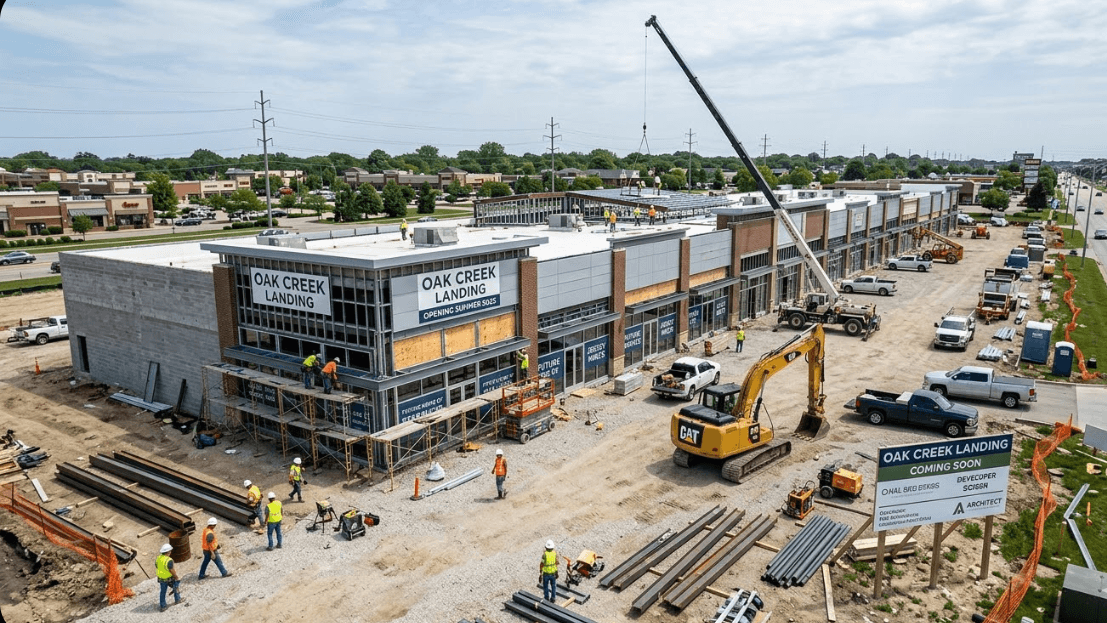
Simultaneous construction sounds like it triples your speed. In practice it triples four things that are already hard to manage, and it removes the one advantage multi-unit operators actually have.
You repeat every mistake three times
This is the big one. Unit one teaches you things no prototype package can: that the brand’s specified hood does not fit the ceiling height common in your market, that a particular inspector reads a code section a particular way, that your millwork vendor ships two weeks late, that your equipment package is missing a transition piece nobody caught.
If units two and three are already framed when you learn that, you fix it three times at three times the cost. If unit two is still in design when unit one hits rough-in, you fix it once and prevent it twice.
A staggered rollout converts your first unit into paid research for the next two. A parallel rollout throws that away.
Supervision does not scale the way you expect
Three active job sites need three superintendents, or one superintendent driving between three sites and being fully present at none. The trades feel it immediately. Your electrician now has three crews out instead of one, staffed with whoever was available rather than whoever is best.
The third site is always the one where quality slips. It is not a character flaw in anybody. It is arithmetic.
Cash burn arrives all at once
Three rent commencement dates, three sets of pre-opening payroll and training, three utility deposits, three inventory loads, and three draw schedules hitting your lender in the same window.
If all three open within a month of each other, you carry three units of burn simultaneously with zero revenue history to borrow against. Staggering the openings means unit one is generating cash before unit three’s payroll starts.
Management staffing is often the real constraint
Most franchisors require a certified general manager per location, and training slots run on the franchisor’s calendar, not yours. Finding and certifying three qualified GMs in the same eight-week window is frequently harder than building three restaurants.
We have seen finished units sit dark waiting on a manager to clear training. That is the same loss as a construction delay, with none of the excuse.
What You Can Batch Across Three Sites
Multi-unit does create real efficiencies. They are just concentrated in design and procurement rather than in construction.
Architecture. Your local architect adapts the franchisor prototype into an Illinois permit set once. Each site then needs its own adaptation for structure, dimensions, and local code, but the base work is done once rather than three times. Negotiate this as a three-site engagement up front, not as three separate contracts.
Equipment. A three-unit order gets better pricing and, more importantly, a single production slot rather than three separate queue entries. Walk-ins, hoods, and refrigeration are built to order, so being one order instead of three genuinely helps your delivery dates.
Millwork and brand fixtures. Same logic. Franchise-approved vendors serve every franchisee in the system at once, and a three-unit package generally gets sequenced better than three individual orders placed months apart.
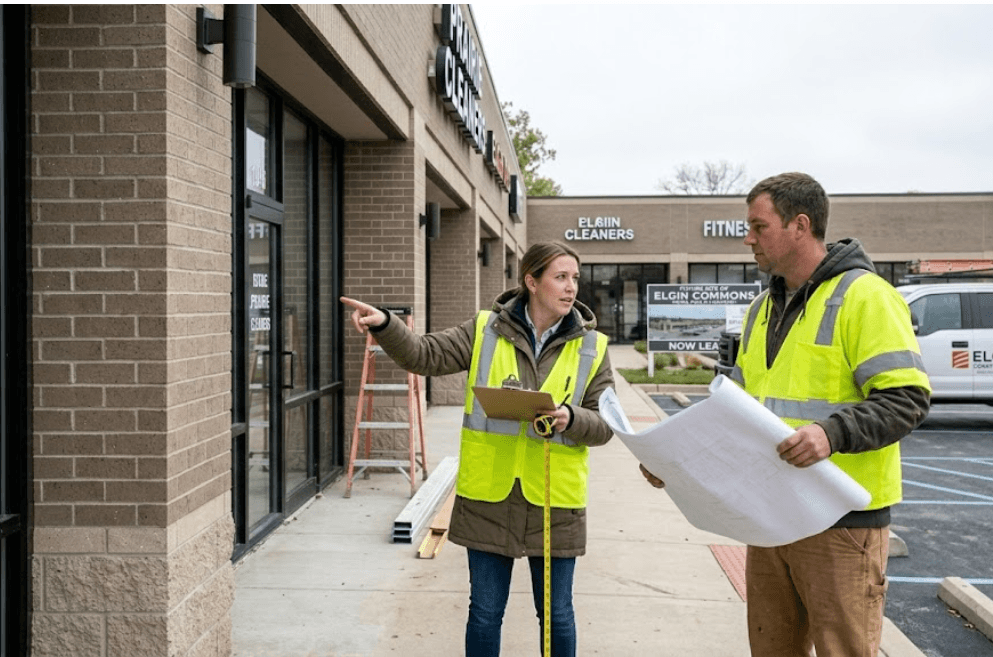
General contractor. One contractor across all three sites means one project executive holding the whole schedule, shared submittal packages, and lessons that actually transfer between sites. It also means your unit three crew already knows the brand standards.
Signage. One vendor, one set of shop drawings, three permit applications.
What You Absolutely Cannot Batch
This is where multi-unit developers coming from other markets get hurt, and it is the reason true parallel construction does not deliver the compression people expect.
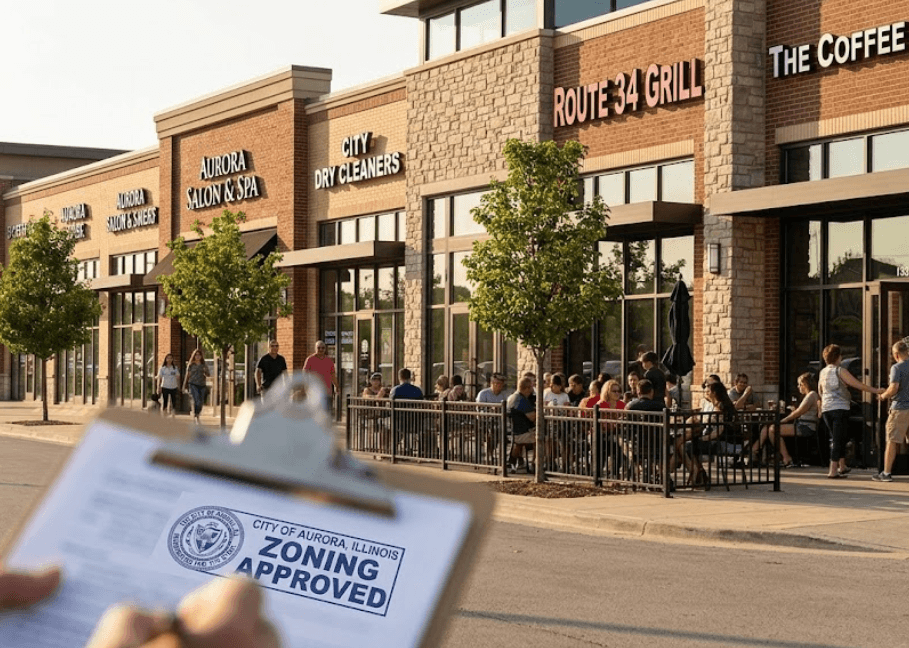
Permits. Each municipality reviews independently on its own calendar with its own requirements. If site one is in Chicago, site two is in Naperville, and site three is in Orland Park, you are running three unrelated approval processes. Nothing about approval in one helps you in another.
Business licenses. City of Chicago business licenses are non-transferable. Each restaurant and each location must have its own license in order to operate, even if you already hold licenses for other units in the city. A debt check runs on each application.
Health department plan review. Chicago Municipal Code 7-38-035 requires plans to be submitted to the department of health and approved prior to construction, not inspected afterward. That review is per location. Suburban sites may go through a county health department instead, with different submittal standards.
Utility service. Separate applications, separate accounts, separate meters, and if any site needs a service upgrade, a separate equipment lead time.
Liquor licenses and certificates of occupancy. Per address, always, with no credit for having done it before.
The practical implication: your three sites have three independent critical paths that happen to share a procurement stream. Treat them as three projects with one supply chain, not as one project with three addresses.
The Three Sequencing Strategies, Honestly Compared
Sequential: finish one, then start the next
Roughly 24 to 30 months for three units. Lowest risk, lowest carrying cost, best learning transfer, easiest to staff and supervise.
The problem is that most development agreements will not tolerate it. If your schedule requires three open units by year two, sequential math does not get you there.
Worth considering if your schedule has room, or if this is your first multi-unit push and you have not yet validated the concept in your specific market.
Staggered: start the next when the last hits construction
Roughly 14 to 18 months for three units, with construction starts 6 to 10 weeks apart. This is what we recommend in almost every case.
That interval is not arbitrary. It is chosen so that unit one’s rough-in inspection happens before unit two’s rough-in, and unit one’s health inspection happens before unit three’s kitchen is finalized. Each hard lesson lands while the next site can still act on it.
It also flattens your supervision curve. One site is in permitting while another is in construction while another is in closeout, so you need one strong superintendent rather than three.
Parallel: all three simultaneously
Roughly 10 to 14 months. Fastest on paper.
It is the right answer in exactly one situation: when your development agreement deadline is genuinely immovable, you are well capitalized, you already have three certified managers lined up, and you have built this brand before so the learning curve is behind you.
Outside those conditions, the four to eight months you gain tend to get spent on rework, premium trade rates, and quality problems that surface after opening.
Which Location Should You Build First
Counterintuitive answer: build the easiest one first, not the best one.
Developers instinctively want to lead with their strongest site, the one with the best traffic counts and the highest projected volume. That is backwards for a rollout.
Lead with whichever site has the fewest unknowns. Usually that means a second-generation food space where the grease waste, hood infrastructure, and electrical service already exist, in a municipality with a predictable review process.
Three reasons this works:
- It opens fastest, so revenue starts earlier and funds the other two
- It surfaces the brand-specific and market-specific problems while the other sites can still absorb the fix
- It gives your lender an operating unit with real numbers before you draw hard on sites two and three
Save the complicated site, the ground-up pad, or the drive-thru requiring special use approval for last, when your team has run the playbook twice. Our comparison of build-out versus ground-up construction covers why those two paths carry such different risk profiles.
The Procurement Trap Nobody Warns You About
Here is the failure mode specific to multi-unit rollouts.
You order equipment for all three units at once, which is correct, because it gets you better pricing and a single production slot. Then site two’s permit gets hung up in plan review for six weeks.
Now you have a walk-in cooler, a hood assembly, and a full millwork package arriving for a building you cannot legally enter. Manufacturers will not hold finished goods indefinitely, and storage charges start.
Budget for warehousing from the start. On a three-unit rollout, assume at least one site will slip and price 8 to 12 weeks of climate-controlled storage for one unit’s package as a line item rather than a surprise. It is a small number compared to what it costs to scramble for space with a truck already en route.
The related rule: order off franchisor-approved drawings rather than permitted drawings, but sequence deliveries to each site’s actual permit status, not to the original schedule. One order, three delivery dates, confirmed 30 days out.
Building Across Multiple Municipalities
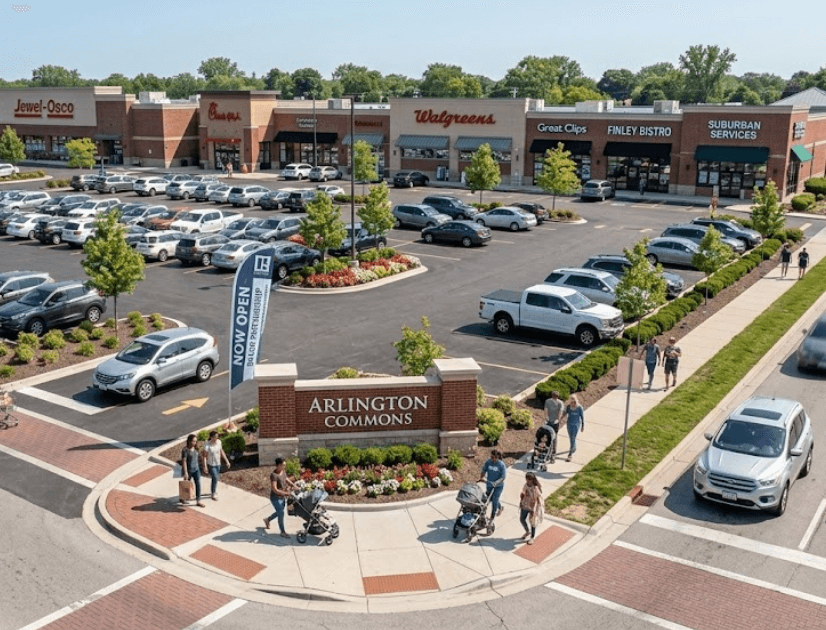
A Chicagoland rollout almost never sits in one jurisdiction, and that shapes your sequencing more than anything else.
Chicago has more layered requirements than most suburbs, but they are documented and consistent. You know what the process is before you start.
The suburbs vary enormously. Some have a streamlined commercial review and will meet with your architect before submittal. Others review on a fixed monthly calendar, which means one round of comments costs thirty days. Some require a pre-application conference. Health review may sit with Cook, DuPage, or Will County rather than a village department.
Practical approach for a three-site rollout:
- Map all three municipalities’ actual processes before you set any opening dates
- Stagger so the site with the least predictable review goes into permitting first, even if it gets built last
- Assign one person to monitor plan review comments across all three submissions daily
- Never assume approval in one village signals anything about another
We build across Chicago and more than twenty five suburbs and file under each one’s own rules. For the full phase-by-phase breakdown of a single unit, see our guide to the franchise buildout timeline from site approval to grand opening.
A Realistic 16-Month Three-Unit Schedule
Assuming a staggered rollout with three inline units across three municipalities:
Months 1 to 2. All three leases negotiated and executed. Contractor walks all three spaces before signing. Architect engaged on a three-site basis.
Months 2 to 4. Prototype adapted for all three. Franchisor approvals on any deviations. Equipment and millwork ordered for all three off approved drawings. Liquor license applications filed for all three if applicable.
Months 3 to 7. Permitting staggered, hardest municipality submitted first. Health department plan reviews filed with building permits, not after.
Months 5 to 9. Site one construction. Lessons documented weekly and pushed to sites two and three.
Months 7 to 11. Site two construction, starting roughly 8 weeks behind site one and incorporating its corrections.
Months 9 to 13. Site three construction.
Months 9, 12, and 15. Openings, spaced so each unit stabilizes before the next launches and your management bench is not stretched across three simultaneous grand openings.
Sixteen months for three units, with one superintendent, one equipment order, and a learning curve that compounds instead of repeating.
Frequently Asked Questions
Should I build three franchise locations at the same time?
Usually not. Simultaneous construction triples your supervision load, spreads your trade partners thin, concentrates your cash burn into one window, and forces you to repeat every lesson from the first unit across the other two before you have learned it. A staggered rollout with construction starts 6 to 10 weeks apart typically delivers all three units in 14 to 18 months while keeping one superintendent, one equipment order, and a learning curve that compounds. Parallel construction makes sense only when a development deadline is immovable, you are well capitalized, your managers are already certified, and you have built this brand before.
How long does it take to open three franchise locations?
A staggered three-unit rollout across Chicagoland typically runs 14 to 18 months from lease execution to the third opening. True parallel construction can compress that to 10 to 14 months at significantly higher risk. A fully sequential approach, where each unit finishes before the next begins, runs 24 to 30 months and is usually too slow to satisfy a development agreement schedule.
What can be shared across multiple franchise locations?
Design and procurement batch well. One architect adapts the franchisor prototype into an Illinois permit set once, with site-specific adaptations after. One equipment order across three units gets better pricing and a single production slot rather than three separate queue entries. Millwork, brand fixtures, signage, and the general contractor relationship all benefit from being handled as one package. What does not batch is anything requiring government approval.
Can I use one permit for multiple franchise locations?
No. Each municipality reviews independently on its own calendar with its own requirements, and approval in one jurisdiction gives you nothing in another. The same applies to business licenses, health department plan reviews, utility accounts, liquor licenses, and certificates of occupancy. City of Chicago business licenses are specifically non-transferable, so each location must have its own even if you already operate other units in the city. Treat a three-site rollout as three projects sharing one supply chain.
Which location should I build first in a multi-unit rollout?
The easiest one, not the best one. Lead with whichever site has the fewest unknowns, which usually means a second-generation food space where grease waste, hood infrastructure, and electrical service already exist, in a municipality with a predictable review process. It opens fastest so revenue starts earlier, it surfaces brand-specific problems while the other sites can still absorb the fix, and it gives your lender an operating unit with real numbers before you draw hard on the others.
What happens if I miss my development agreement deadline?
An area development agreement sets a binding development schedule, not a projection. Missing a milestone is a default regardless of the reason, absent negotiated force majeure provisions. The typical remedy is that the franchisor reduces or revokes your remaining territory and development rights and keeps the development fee. This is why sequencing decisions should be made against the contractual dates at the very start of the process rather than adjusted for once construction is already underway.
How far apart should I stagger construction starts?
Roughly 6 to 10 weeks between construction starts. That interval is chosen so the first unit’s rough-in inspection happens before the second unit’s rough-in, and the first unit’s health inspection happens before the third unit’s kitchen layout is finalized. Each hard lesson lands while the next site can still act on it. It also flattens supervision, because one site is in permitting while another is in construction and another is in closeout.
What is the biggest procurement risk in a multi-unit rollout?
Equipment arriving for a site whose permit has slipped. Ordering all three units at once is correct for pricing and production scheduling, but if one site gets hung up in plan review, you have a walk-in cooler, hood assembly, and millwork package arriving for a building you cannot enter. Manufacturers will not hold finished goods indefinitely. Budget 8 to 12 weeks of climate-controlled storage for one unit’s package as a planned line item, and confirm each site’s delivery date against its actual permit status 30 days out.
Is management staffing or construction the bigger constraint?
Often staffing. Most franchisors require a certified general manager per location, and training slots run on the franchisor’s calendar rather than yours. Finding and certifying three qualified managers within the same eight-week window is frequently harder than building three restaurants. A finished unit sitting dark while a manager clears training costs exactly the same as a construction delay, so management hiring should be sequenced alongside the build schedule from day one.
Planning a Multi-Unit Rollout in Chicagoland
The area developers who hit their schedules are rarely the ones who built fastest. They are the ones who sequenced so that each unit made the next one easier.
Horizon Construction Team handles franchise and chain construction, restaurant and cafe construction, and retail shop construction across Chicago and the suburbs. On multi-unit programs we hold one schedule across every site, so lessons from unit one reach unit two before it needs them.
Before you commit to a development schedule, read our commercial lease build-out checklist and our breakdown of the hidden costs of retail construction.
Call (773) 858-3214 or request a free quote. Offices at 211 W Wacker Drive, Suite 324, Chicago, IL 60606.
Sources: Area development agreement structure and development schedule default remedies, franchise legal guidance. City of Chicago business licensing requirements on non-transferable licenses. Chicago Municipal Code 7-38-035 on submittal of plans and drawings to the department of health prior to construction.