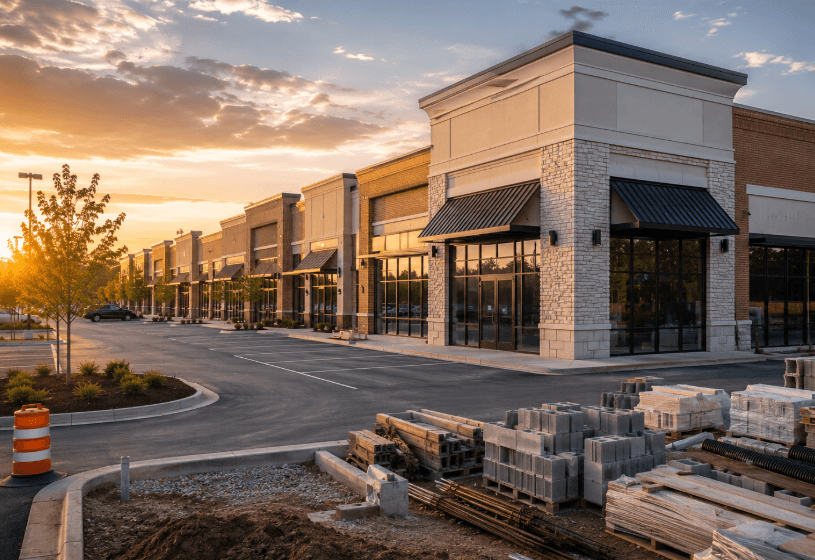
The Hidden Costs of Retail Construction Nobody Talks About
Quick Answer
Most retail construction projects exceed their original budgets because of expenses that are often overlooked during the planning stage. While developers typically focus on land acquisition, building construction, and interior finishes, unexpected costs such as utility upgrades, permit revisions, stormwater requirements, traffic studies, soil issues, temporary power, inspection corrections, and inflation can significantly increase overall project expenses.
In many cases, these hidden costs can add 10% to 25% or more to a project’s total budget if they are not identified early. Understanding these potential expenses before construction begins is one of the most effective ways to improve budgeting accuracy and avoid costly surprises.
Horizon Construction Team provides a clear quote that includes all the possible expenses and costs of a retail construction project.
Why Retail Construction Budgets Often Change
Few developers begin a project expecting major budget increases. Most construction budgets are built around obvious expenses such as site acquisition, architectural plans, permits, materials, labor, and interior build-outs. However, retail construction projects are complex, and many costs do not become apparent until design, permitting, or construction is already underway.
The challenge is that many of these expenses are technically predictable, but they are often underestimated or excluded from preliminary budgets. As projects progress, developers may discover additional site requirements, infrastructure deficiencies, municipal requirements, or market conditions that were not fully accounted for during the planning phase.
This does not necessarily mean a project was poorly planned. Rather, it highlights the importance of understanding the less obvious factors that can influence commercial construction costs.
Utility Upgrades Can Become a Major Budget Surprise
One of the most common hidden costs in retail construction involves utility infrastructure.
Many sites lack sufficient utility capacity to support modern retail operations. A shopping plaza, restaurant, fitness center, medical tenant, or multi-tenant retail development may require additional electrical service, upgraded water lines, larger sanitary sewer connections, or expanded stormwater infrastructure.
Developers often assume utilities are already available because services exist near the property. However, availability does not always mean capacity. Municipalities and utility providers may require upgrades before approving new development.
These improvements can add tens of thousands or even hundreds of thousands of dollars to project budgets, particularly when utility extensions or off-site improvements are required.
Expert Insight
Utility capacity should be evaluated during site due diligence, not after construction drawings are completed. Early utility coordination often prevents expensive redesigns and unexpected infrastructure costs.
Permit Revisions and Additional Municipal Requirements
Most developers understand that permits cost money. What many do not anticipate is the cost associated with permit revisions and additional review requirements.
Rarely does a commercial project move through the approval process without comments from reviewing agencies. Building departments, fire departments, engineering reviewers, and planning commissions often request revisions before issuing approvals.
These revisions may require:
- Additional architectural work
- Engineering modifications
- Resubmittals
- Additional permit fees
- Extended review periods
Although individual revisions may appear minor, the cumulative impact can increase both project costs and construction timelines.
Municipal requirements also vary significantly between jurisdictions. A project approved quickly in one community may require substantially more documentation and review in another.
Stormwater Requirements Are Frequently Underestimated
Stormwater management is one of the least understood aspects of commercial development, yet it can have a significant impact on project budgets.
Many retail developments require systems designed to manage runoff generated by buildings, parking lots, sidewalks, and landscaped areas. Municipalities often enforce strict stormwater regulations intended to protect local infrastructure and waterways.
Depending on site conditions, developers may be required to install:
- Detention ponds
- Underground stormwater storage systems
- Water quality treatment structures
- Additional drainage infrastructure
- Specialized engineering solutions
These requirements can add substantial costs that are not immediately obvious when evaluating a property.
The challenge is that stormwater expenses often become clear only after engineering analysis has been completed, which means budget adjustments may occur later in the development process.
Traffic Studies and Roadway Improvements
Retail developments generate vehicle traffic, and municipalities often want to understand how new projects will affect local transportation networks.
For larger developments, local agencies may require traffic studies before approving permits or zoning applications. These studies evaluate how vehicles will enter and exit the site and whether nearby intersections can accommodate increased traffic volumes.
While the studies themselves involve additional consulting costs, the larger expense often comes from the recommended improvements.
Developers may be required to fund:
- Turn lanes
- Traffic signals
- Signage improvements
- Road widening
- Access modifications
Depending on project size and location, these requirements can significantly increase development costs.
Soil Conditions Can Change Everything
What exists below the surface of a property can dramatically affect construction budgets.
A site may appear ideal during initial evaluations, yet subsurface investigations can reveal challenges that require additional work. Common issues include unsuitable soils, buried debris, groundwater concerns, rock formations, or environmental conditions that complicate construction.
When poor soil conditions are discovered, developers may need to invest in:
- Excavation and replacement
- Soil stabilization
- Additional foundations
- Specialized engineering solutions
- Environmental remediation
These issues often cannot be identified through visual inspections alone, which is why geotechnical investigations are an important part of due diligence.
Ignoring potential soil risks can lead to significant budget overruns once construction begins.
Temporary Power and Job Site Expenses Add Up Quickly
Many project budgets focus on permanent construction costs while overlooking temporary infrastructure required during construction.
Retail construction projects often require temporary utilities and support services including:
- Temporary electrical service
- Temporary water service
- Construction fencing
- Portable restrooms
- Site security
- Dust control measures
- Temporary access roads
Individually, these expenses may seem relatively minor. Collectively, they can represent a meaningful portion of project costs, particularly on larger developments or projects with extended schedules.
Because these expenses are necessary to support construction operations, they should be considered early in the budgeting process.
Material Lead Times Can Increase Costs
Material costs are not the only concern when evaluating construction budgets. Timing can also have a major financial impact.
Long lead times for critical materials often affect retail construction projects. Equipment such as electrical switchgear, rooftop HVAC units, storefront systems, elevators, and specialty finishes may require months to manufacture and deliver.
When lead times increase, projects may experience:
- Construction delays
- Additional labor costs
- Extended equipment rentals
- Schedule disruptions
- Increased financing expenses
Developers who postpone material selections may inadvertently expose their projects to higher costs and longer schedules.
Early procurement planning has become increasingly important in today’s construction environment.
Failed Inspections and Correction Work
Inspections are a normal part of commercial construction, but failed inspections can create unexpected costs.
When work does not meet applicable codes or approved plans, corrections may be required before construction can proceed. These corrections often involve additional labor, materials, and scheduling adjustments.
Common issues include:
- Electrical deficiencies
- Plumbing corrections
- Fire protection modifications
- Accessibility compliance issues
- Documentation discrepancies
Beyond the direct cost of repairs, inspection failures can also delay project completion and affect occupancy schedules.
Strong quality control throughout construction is one of the most effective ways to minimize these risks.
Inflation Continues to Affect Construction Budgets
Inflation remains one of the most challenging variables for developers and contractors alike.
Construction materials, labor, transportation, equipment, and financing costs can fluctuate significantly over the course of a project. Developments that take several years to move from planning to construction are particularly vulnerable to market changes.
Even relatively small price increases can have a meaningful impact on large retail developments.
For example, a modest increase in material costs may translate into tens of thousands or even hundreds of thousands of dollars in additional expenses depending on project size.
Developers who establish realistic contingencies are often better positioned to absorb market fluctuations without disrupting project objectives.
How Much Can Hidden Costs Increase a Retail Construction Budget?
The impact varies depending on project complexity, site conditions, and location.
As a general guideline, hidden costs often increase total project budgets by approximately 10% to 25% beyond initial estimates. More complex developments may experience even greater cost increases if significant infrastructure, environmental, or regulatory challenges emerge.
Consider a retail center with a projected construction budget of $3 million.
A combination of utility upgrades, stormwater requirements, permit revisions, material escalation, and site conditions could potentially add several hundred thousand dollars to the overall project cost.
This is why experienced developers typically include contingency allowances within their budgets.
What Experienced Developers Do Differently
Successful developers like Horizon Construction Team understand that uncertainty is part of the construction process.
Rather than assuming the initial estimate represents the final cost, they invest heavily in due diligence before making major financial commitments.
This often includes:
- Utility investigations
- Geotechnical studies
- Environmental assessments
- Preliminary engineering reviews
- Traffic evaluations
- Early contractor involvement
By identifying potential risks early, developers gain a more accurate understanding of project costs and avoid unpleasant surprises later.
The goal is not to eliminate every uncertainty. The goal is to uncover as many variables as possible before construction begins.
Frequently Asked Questions
The Most Expensive Construction Costs Are Often the Ones You Don’t See Coming
The biggest budget challenges in retail construction are rarely the expenses everyone expects. Most developers plan for concrete, steel, roofing, finishes, and labor. The costs that create the greatest disruption are often the less visible factors such as utility upgrades, municipal requirements, stormwater compliance, site conditions, and market fluctuations.
Understanding these hidden costs does more than protect budgets. It improves project planning, reduces delays, and helps developers make more informed investment decisions. As retail construction projects become increasingly complex, proactive planning and comprehensive due diligence are becoming more valuable than ever.
For developers, investors, landlords, and business owners, recognizing these risks early can be the difference between a project that stays on budget and one that faces costly surprises along the way.