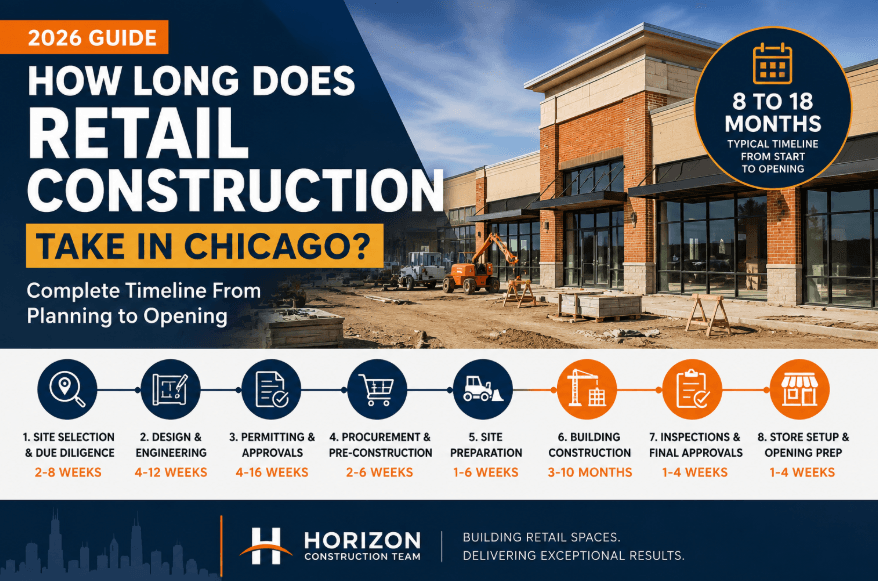
Retail construction in Chicago typically takes 8 to 18 months from initial planning to opening day. Smaller retail build-outs may be completed within 4 to 8 months, while ground-up retail developments, shopping centers, and multi-tenant retail plazas often require 12 to 18 months or longer.
How Long Does Retail Construction Take in Chicago?
The biggest misconception among business owners is that construction itself is the longest phase. In reality, design, permitting, municipal reviews, utility coordination, and procurement frequently consume as much time as construction activities.
For developers, franchise operators, landlords, and investors, understanding the complete timeline is critical for setting realistic budgets, lease agreements, financing schedules, and grand opening targets.
Key Takeaways
- Most Chicago retail construction projects take between 8 and 18 months from planning to opening.
- Site selection and due diligence typically require 2 to 8 weeks.
- Design and engineering often take 4 to 12 weeks.
- Permitting can add 4 to 16 weeks depending on the municipality and project scope.
- Construction timelines range from several weeks for tenant improvements to 12 months or more for ground-up developments.
- Early planning and contractor involvement are among the most effective ways to reduce delays.
Retail Construction Timeline at a Glance
| Project Phase | Typical Duration |
|---|---|
| Site Selection & Due Diligence | 2-8 Weeks |
| Design & Engineering | 4-12 Weeks |
| Permitting & Approvals | 4-16 Weeks |
| Procurement & Pre-Construction | 2-6 Weeks |
| Site Preparation | 1-6 Weeks |
| Construction | 3-10 Months |
| Inspections & Final Approvals | 1-4 Weeks |
| Store Setup & Opening Preparation | 1-4 Weeks |
Estimated Total Timeline
8 to 18 Months
The timeline varies based on project type, location, municipal requirements, weather conditions, utility availability, and overall project complexity.
What Most Retail Developers Underestimate About Construction Timelines
Many first-time developers assume that construction begins shortly after signing a lease or purchasing property.
In reality, several critical activities must occur before construction crews can begin work.
Architectural planning, engineering coordination, zoning reviews, permit approvals, utility applications, and procurement often represent a substantial portion of the overall timeline.
Consider a typical retail store project that requires four months of physical construction. The total project duration may still exceed eight months once planning, permitting, inspections, and opening preparation are included.
This distinction is important because inaccurate schedule expectations often lead to financial strain, delayed openings, and unnecessary project pressure.
Phase 1: Site Selection and Due Diligence
Typical Timeline: 2 to 8 Weeks
Every successful retail project begins with selecting the right location.
Whether developing a standalone store, shopping plaza, franchise location, or retail center, site selection has a direct impact on project success and schedule predictability.
During this phase, developers evaluate:
- Property accessibility
- Traffic patterns
- Demographics
- Parking requirements
- Zoning restrictions
- Utility availability
- Environmental conditions
- Property acquisition or lease terms
A site that appears ideal from a business perspective may present significant construction challenges.
For example, insufficient utility capacity or restrictive zoning regulations can add months to a project schedule.
Expert Insight
One of the most common causes of retail construction delays is selecting a property before verifying zoning and utility requirements. Identifying these issues during due diligence can prevent major redesigns and costly schedule extensions later in the project.
Phase 2: Design and Engineering
Typical Timeline: 4 to 12 Weeks
After securing a site, architects and engineers begin translating the project vision into construction documents.
This stage typically includes:
- Architectural design
- Structural engineering
- Mechanical systems design
- Electrical design
- Plumbing layouts
- Fire protection planning
- ADA compliance review
- Cost estimating
For franchise locations, additional design reviews may be required to meet corporate branding and operational standards.
Why Design Often Takes Longer Than Expected
Retail projects frequently undergo multiple revisions.
Business owners may adjust:
- Store layouts
- Customer traffic flow
- Product display areas
- Kitchen equipment placement
- Storage requirements
- Branding features
Although revisions can increase design duration, thorough planning usually reduces costly construction changes later.
Phase 3: Permitting and Municipal Approvals
Typical Timeline: 4 to 16 Weeks
Permitting is often the most unpredictable phase of a retail construction project.
Before construction begins, plans may need approval from several departments and agencies.
Depending on project scope, approvals may include:
- Building permits
- Zoning reviews
- Fire department approvals
- Health department reviews
- Utility approvals
- Accessibility compliance reviews
- Stormwater management approvals
Ground-up retail developments generally require more extensive review than interior tenant improvements.
Chicago-Specific Considerations
Permitting timelines vary significantly throughout the Chicago metropolitan area.
A project in downtown Chicago may follow a different review process than a similar project in Schaumburg, Arlington Heights, Buffalo Grove, Deerfield, Elgin, or other surrounding communities.
Understanding local requirements early helps establish more accurate project schedules.
Expert Insight
Many project delays occur because permit requirements are addressed too late in the process. Coordinating with design professionals and contractors before permit submission often reduces review comments and approval delays.
Phase 4: Procurement and Pre-Construction Planning
Typical Timeline: 2 to 6 Weeks
Once permits are progressing or approved, project teams begin preparing for construction.
Key activities include:
- Final subcontractor selection
- Material purchasing
- Equipment procurement
- Construction scheduling
- Site logistics planning
- Utility coordination
This phase has become increasingly important due to longer lead times for certain commercial construction materials.
Common Long-Lead Items
Examples include:
- Electrical switchgear
- Rooftop HVAC systems
- Custom storefront systems
- Commercial kitchen equipment
- Specialty lighting
- Elevator components
- Custom millwork
Ordering critical materials early can prevent substantial schedule disruptions.
Phase 5: Site Preparation
Typical Timeline: 1 to 6 Weeks
Ground-up retail projects require site preparation before building construction begins.
Activities may include:
- Demolition
- Excavation
- Grading
- Utility installation
- Soil stabilization
- Drainage improvements
Unexpected site conditions are one of the leading causes of schedule extensions.
Common examples include underground utility conflicts, poor soil conditions, environmental remediation requirements, and unforeseen infrastructure issues.
Phase 6: Building Construction
Typical Timeline: 3 to 10 Months
The construction phase varies significantly depending on project size and complexity.
Small Retail Build-Outs
Typical Duration: 4 to 12 Weeks
Examples:
- Boutique stores
- Service-based retail locations
- Existing tenant improvements
- Small franchise spaces
Because the building shell already exists, work primarily focuses on interior improvements.
Standalone Retail Buildings
Typical Duration: 4 to 8 Months
Examples:
- Single-tenant retail stores
- Freestanding franchise locations
- Specialty retail facilities
These projects often involve both site work and building construction.
Shopping Centers and Retail Plazas
Typical Duration: 6 to 12 Months
Examples:
- Multi-tenant retail centers
- Strip malls
- Shopping plazas
- Mixed-use retail developments
Additional infrastructure requirements naturally increase construction duration.
How Long Does Retail Construction Take by Project Type?
| Project Type | Typical Timeline |
| Small Retail Build-Out | 4-6 Months |
| Franchise Store | 6-10 Months |
| Restaurant Construction | 8-12 Months |
| Standalone Retail Building | 10-14 Months |
| Multi-Tenant Retail Center | 12-18 Months |
| Shopping Plaza Development | 12-24 Months |
These estimates include planning, permitting, construction, inspections, and opening preparation.
Phase 7: Inspections and Final Approvals
Typical Timeline: 1 to 4 Weeks
Before opening, projects must pass required inspections.
These often include:
- Building inspections
- Electrical inspections
- Plumbing inspections
- Mechanical inspections
- Fire protection inspections
- Accessibility inspections
Inspectors verify compliance with approved plans and applicable codes.
Projects that maintain strong quality control throughout construction generally experience fewer inspection-related delays.
Phase 8: Store Setup and Opening Preparation
Typical Timeline: 1 to 4 Weeks
Construction completion does not mean the business is ready to open immediately.
Retailers still need time for:
- Merchandise stocking
- Fixture installation
- Technology setup
- Employee training
- Marketing preparation
- Final cleaning
Many project schedules underestimate this final phase.
Retail Construction Timeline Example
To better understand how project schedules work in practice, consider the following example.
Example Retail Build-Out Project
A 6,000-square-foot retail store is being developed within an existing shopping center in a Chicago suburb.
Project Schedule
| Phase | Duration |
| Site Selection | 3 Weeks |
| Lease Negotiation | 2 Weeks |
| Design & Engineering | 6 Weeks |
| Permit Review | 8 Weeks |
| Procurement | 3 Weeks |
| Interior Construction | 16 Weeks |
| Inspections | 2 Weeks |
| Store Setup | 2 Weeks |
Total Timeline
Approximately 8 Months
In this example, construction represented only half of the overall project schedule.
Planning, approvals, and opening preparation accounted for the remaining timeline.
Common Timeline Mistakes Retail Developers Make
Many project delays are preventable.
The following mistakes frequently extend retail construction schedules.
1. Signing a Lease Before Understanding Permit Requirements
Developers sometimes commit to lease agreements before evaluating permit requirements.
Unexpected approval timelines can result in months of rent expenses before the business opens.
2. Assuming Construction Is the Longest Phase
Many owners focus exclusively on construction duration while overlooking permitting and design requirements.
This often leads to unrealistic opening expectations.
3. Making Major Design Changes During Construction
Late design modifications frequently require:
- New drawings
- Additional approvals
- Material reorders
- Revised schedules
Even minor changes can create significant ripple effects.
4. Delaying Material Selections
Long-lead items can become critical schedule bottlenecks.
Waiting too long to make decisions often creates avoidable delays.
5. Failing to Coordinate Utilities Early
Electric, gas, water, and telecommunications providers operate independently from construction schedules.
Late utility applications can delay occupancy even when construction is complete.
Ask the Contractor
Final Thoughts
Retail construction is rarely delayed because crews are unable to build. More often, project schedules are affected by planning challenges, permitting requirements, design coordination, utility approvals, procurement issues, and inspection processes.
For Chicago-area developers, franchise owners, landlords, and investors, understanding the complete project lifecycle is essential for establishing realistic opening dates and protecting project budgets.
While a small retail build-out may be completed within several months, larger retail developments often require a year or more from site selection to grand opening.
The most successful projects share a common approach. They begin planning early, engage experienced commercial construction professionals, address permitting requirements proactively, coordinate utilities in advance, and make critical decisions before construction begins.
By understanding the full retail construction process, business owners can reduce delays, improve budget control, and move from concept to opening day with greater confidence.